
Policing History explores historical interactions between police and the policed.
Perils of Beat Duty
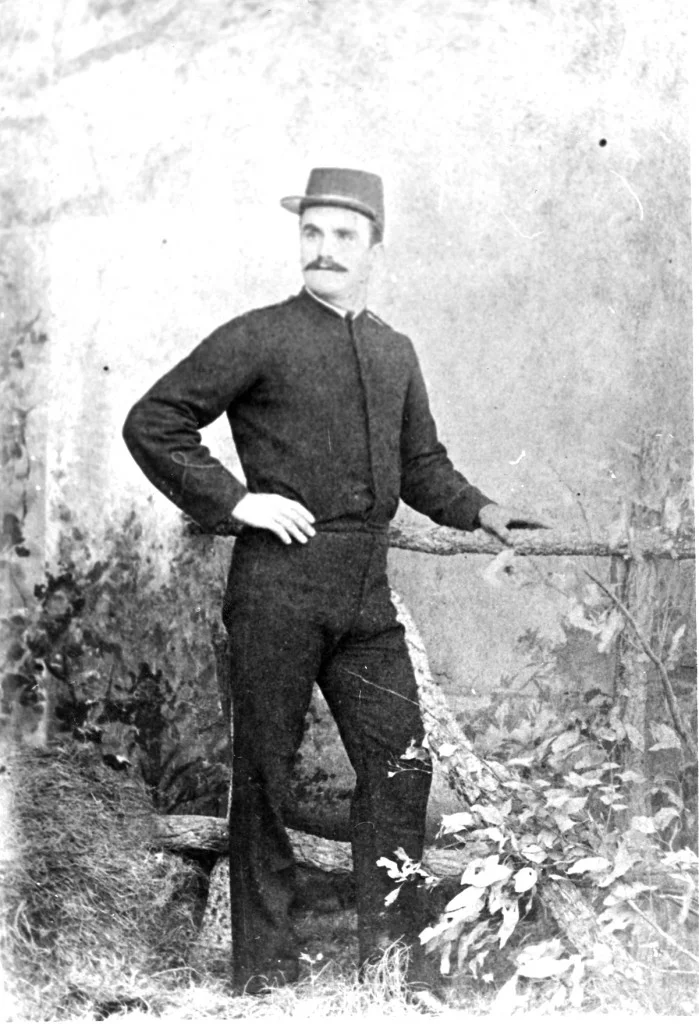
The duties of police Constables were extensive, arduous, and around the clock. After drunkenness and common assaults, misdemeanours against Constables on duty formed the most prominent sub-category tried at the Police Court. Throughout the nineteenth century, one of the most prevalent offences was destroying a policeman’s uniform. This was of great annoyance to the policeman and his wife, assuming he had one, for she bore the responsibility of restoring the uniform; no additional allowance was provided for a replacement. According to the report of Police Commissioner Seymour, in 1866 a new regulation was passed which declared that the members of the force were supposed to provide their own clothing.
'Country Hopefuls'
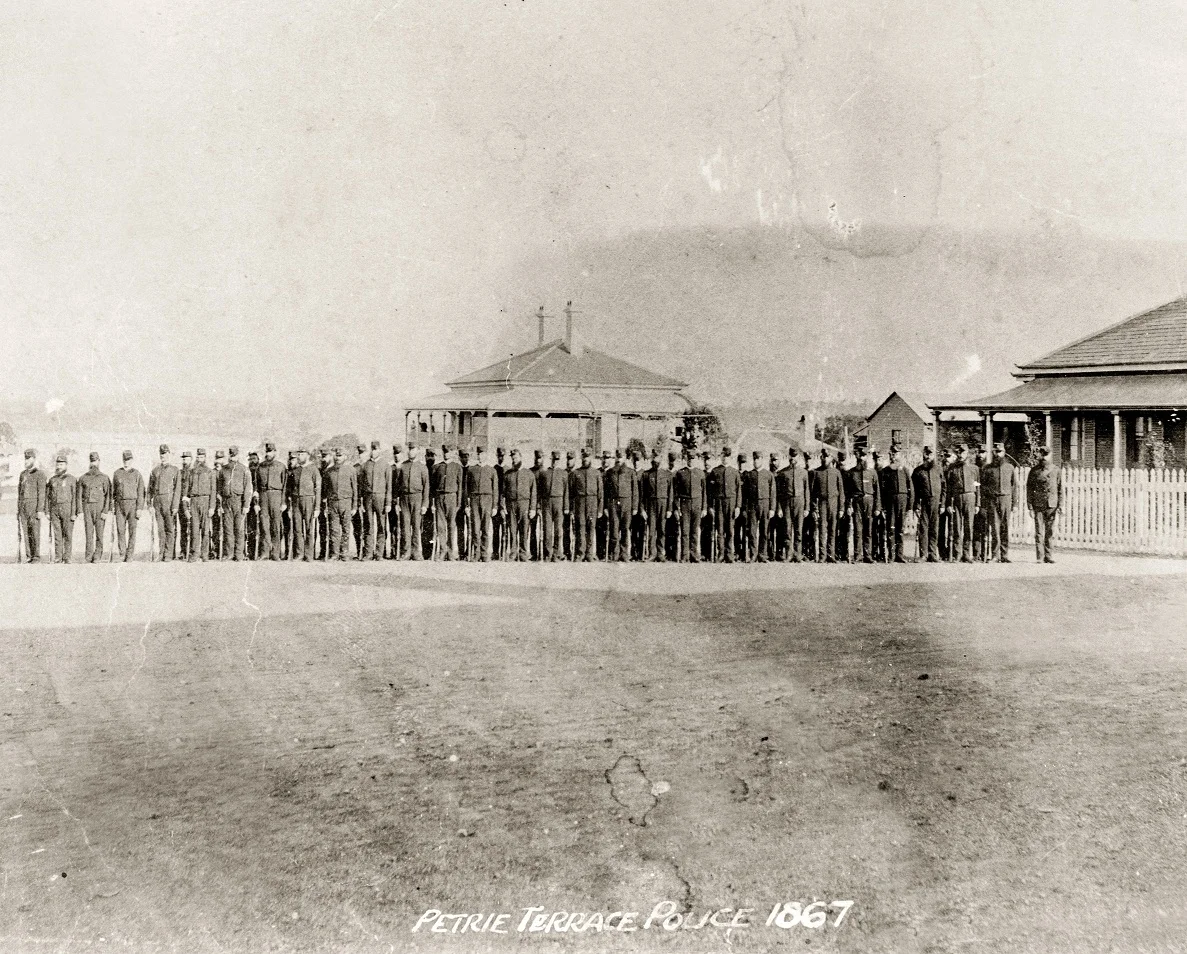
The new colonial police had a complex role. In 1864, the population of the colony stood at 75,000 with a police contingent of 339 to preserve order and prevent crime in a colony that stretched over 400 square miles. The largest police establishment was in the capital of the colony, Brisbane. The men on the city beat were armed solely with batons. The physical requirements for entry into the force compensated for the lack of armaments. Stout uniformed men standing at near or over 6 feet in height with their batons at the ready were deemed an imposing enough sight to discourage potential depredators.